Why Is My Dog Throwing Up? Causes, Colors & When to Worry
Learn what your dog's vomit color means, when vomiting is an emergency, and how to safely treat mild cases at home. Complete guide for concerned pet owners.
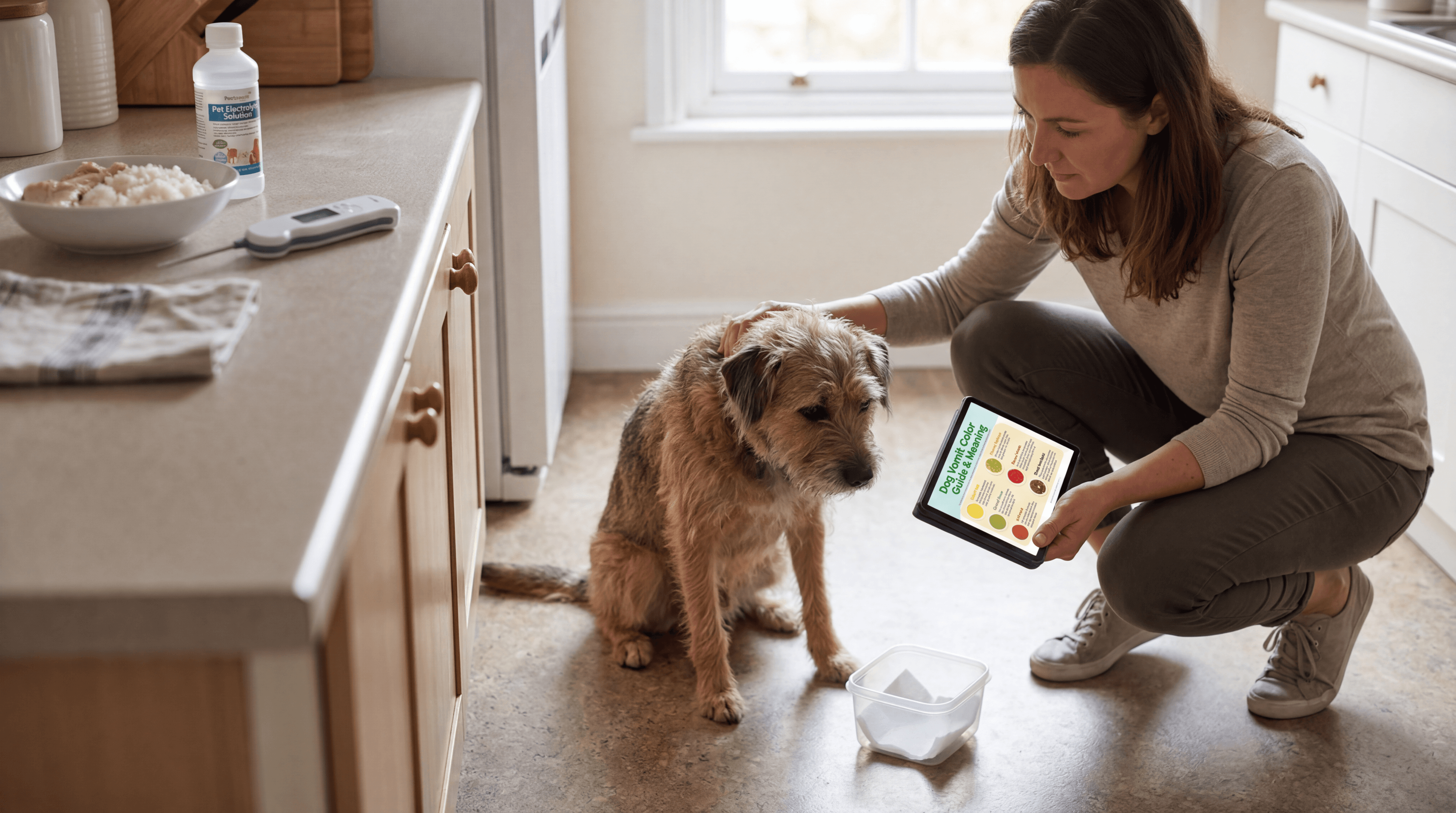
The Quick Answer
Dogs vomit for many reasons—from eating too fast to serious illness. Yellow bile usually means an empty stomach; white foam can indicate acid reflux; blood requires immediate vet attention. Most cases resolve within 24 hours, but repeated vomiting needs professional evaluation. When in doubt, trust your instincts and call your veterinarian.
What Your Dog's Vomit Color Means: A Visual Guide
The color and consistency of your dog's vomit can provide valuable clues about what's happening inside their body.
Yellow Bile
Appearance: Bright yellow to yellow-green liquid, often foamy.
What it means: Yellow bile indicates your dog's stomach was empty when they vomited. Bile is a digestive fluid produced by the liver. When a dog vomits on an empty stomach—often first thing in the morning—there's no food to bring up, only bile.
What to do: Try giving a small bedtime snack or feeding breakfast earlier. If this happens frequently, consult your vet.
White Foam
Appearance: White, frothy, bubble-like consistency.
What it means: White foam is typically saliva and air mixed with stomach acid. It often indicates your dog was nauseous but had little in their stomach to expel. Common causes include eating grass, acid reflux, or empty stomach irritation.
What to do: Occasional white foam vomiting is usually harmless. Monitor for other symptoms. If it happens repeatedly, see your vet.
Clear Liquid
Appearance: Transparent or slightly cloudy water-like fluid.
What it means: Clear liquid vomit is usually water, saliva, or mucus. This often happens when dogs drink too quickly or on an empty stomach.
What to do: Slow down water consumption by offering smaller amounts more frequently.
Undigested Food
Appearance: Whole or partially chewed kibble, recognizable food pieces.
What it means: Food that hasn't been digested suggests vomiting happened soon after eating—usually within 1-2 hours. Common causes include eating too fast, food allergies, or stress during meals.
What to do: Use a slow feeder bowl, feed smaller meals more often, and ensure calm eating environments.
Brown or Coffee Ground Appearance
Appearance: Dark brown, granular material resembling coffee grounds.
What it means: This is a VETERINARY EMERGENCY. Coffee-ground vomit indicates partially digested blood, suggesting bleeding in the upper gastrointestinal tract.
What to do: Go to the vet or emergency clinic immediately. This can be life-threatening.
Red or Bright Red Streaks
Appearance: Fresh red blood, either mixed in or as streaks.
What it means: Fresh blood indicates active bleeding somewhere in the mouth, esophagus, or stomach. This is also a VETERINARY EMERGENCY.
What to do: Seek immediate veterinary care. Even small amounts of fresh blood warrant urgent attention.
10 Common Reasons Dogs Throw Up
1. Dietary Indiscretion (Eating Trash)
Dogs are natural scavengers, and their curious noses often lead them to garbage, compost, spoiled food, or items that are not food at all. This garbage gut is one of the most common causes of vomiting in dogs.
Prevention: Secure trash cans, supervise outdoor time, and teach leave it commands.
2. Eating Too Fast
Some dogs inhale their food so quickly that they swallow large amounts of air along with their kibble. This can trigger the vomiting reflex shortly after eating.
Prevention: Use puzzle feeders, slow feeder bowls, or spread food on a baking sheet.
3. Food Allergies or Intolerances
Dogs can develop sensitivities to certain proteins or ingredients. Common culprits include beef, chicken, dairy, wheat, and soy. Food intolerances often cause vomiting, diarrhea, or itchy skin.
Prevention: Work with your vet to identify triggers through elimination diets.
4. Motion Sickness
Many dogs experience nausea during car rides, especially puppies whose inner ear balance mechanisms are still developing.
Prevention: Limit food before travel, ensure good ventilation, or ask your vet about motion sickness medications.
5. Parasites (Worms)
Intestinal parasites like roundworms, hookworms, and giardia can cause vomiting, especially in puppies.
Prevention: Regular deworming and fecal exams as recommended by your veterinarian.
6. Viral Infections (Parvovirus, Distemper)
Viral infections are particularly dangerous for unvaccinated puppies. Parvovirus causes severe vomiting and bloody diarrhea, while distemper affects multiple body systems. Both can be fatal without prompt treatment.
Prevention: Keep vaccinations current and avoid exposing unvaccinated puppies to public areas.
7. Pancreatitis
Inflammation of the pancreas often occurs after a dog eats high-fat foods like bacon grease or fatty table scraps. Pancreatitis causes severe abdominal pain, vomiting, and lethargy.
Prevention: Never feed fatty human foods; stick to veterinarian-approved treats.
8. Kidney or Liver Disease
As dogs age, their organs may begin to function less efficiently. Kidney disease can cause nausea due to toxin buildup, while liver disease affects digestion.
Management: Regular senior blood work can catch these issues early. Special diets help manage symptoms.
9. Bloat (Gastric Dilatation-Volvulus)
Bloat is a LIFE-THREATENING EMERGENCY most common in large, deep-chested breeds. The stomach fills with gas and can twist, cutting off blood supply.
Prevention: Feed multiple small meals and avoid exercise before and after eating.
10. Toxin Ingestion
Common household toxins include chocolate, grapes, xylitol, certain plants, medications, and antifreeze. Vomiting is often the body's attempt to expel the poison.
Prevention: Pet-proof your home and know the ASPCA Poison Control number: (888) 426-4435.
Home Treatment: When It is Safe to Wait
For a single episode of vomiting in an otherwise healthy, happy dog, home care is often appropriate.
The 12-Hour Fast Protocol
Step 1: Withhold food for 12 hours to give the stomach time to rest.
Step 2: Provide small amounts of water—offer ice cubes or 1-2 tablespoons every 2 hours.
Step 3: Monitor closely. If vomiting continues, proceed to emergency care.
Important: Do not fast puppies under 6 months, senior dogs, or dogs with diabetes.
Reintroducing Food: The Bland Diet
After 12 hours without vomiting, gradually reintroduce food:
Option 1: Boiled chicken and rice (1 part chicken to 2 parts rice, no seasonings).
Option 2: Lean ground turkey and plain canned pumpkin (not pie filling).
Feeding schedule: Offer 1/4 of normal meal size every 3-4 hours, gradually increasing over 2-3 days.
Hydration Tips
Dehydration is a serious risk. Watch for dry sticky gums, sunken eyes, lethargy, and skin that does not bounce back when pinched. Encourage drinking with ice chips, diluted low-sodium chicken broth, or unflavored Pedialyte.
EMERGENCY: When to See a Vet Immediately
Do not attempt home treatment if you observe:
- Blood in vomit (red or coffee-ground appearance)
- Repeated vomiting (more than 3 times in 2 hours)
- Lethargy combined with vomiting—a dog that will not get up or respond normally
- Bloated or painful abdomen—especially if the belly feels hard
- Known or suspected toxin ingestion
- Puppy under 6 months vomiting repeatedly
- Vomiting with diarrhea together
- Projectile vomiting—could indicate obstruction
- Inability to keep water down
Remember: When in doubt, call your vet. Many clinics offer phone consultations.
Puppy Vomiting: Extra Cautions
Puppies require special consideration when it comes to vomiting. Their small size and developing immune systems make them more vulnerable.
Parvo Warning Signs
Parvovirus is a devastating disease affecting unvaccinated puppies under 6 months. Symptoms include: severe vomiting (often foul-smelling), bloody diarrhea, extreme lethargy, loss of appetite, and fever.
Parvo requires immediate hospitalization. Without treatment, mortality exceeds 90%. With veterinary care, survival rates are 80-95%.
When Puppies Dehydrate Faster
A puppy's body is approximately 80% water (compared to 60% in adult dogs). They can become dangerously dehydrated in just 6-12 hours of vomiting, whereas adults might tolerate 24 hours. Any puppy vomiting more than twice should see a veterinarian the same day.
Vaccination Schedule Importance
Parvo and distemper vaccinations begin at 6-8 weeks and continue every 3-4 weeks until 16 weeks. Until complete: avoid dog parks, do not allow contact with unknown dogs, carry your puppy in public, and ensure visiting dogs are vaccinated.
Preventing Future Vomiting Episodes
Slow Feeder Bowls
Puzzle feeders or bowls with built-in obstacles force dogs to eat more slowly, reducing air intake.
Diet Consistency
Transition foods gradually over 7-10 days: Days 1-3 use 75% old food and 25% new; Days 4-6 use 50/50; Days 7-9 use 25% old and 75% new; Day 10+ use 100% new.
Trash-Proofing Your Home
Use locking trash cans, keep compost bins secured, and train a reliable leave it command. Be extra vigilant during holidays.
Car Ride Preparation
For motion sickness: do not feed 2-3 hours before travel, crack windows for fresh air, face your dog forward using a seatbelt or crate, and ask your vet about Cerenia or other motion sickness medications.
Frequently Asked Questions
Why is my dog throwing up yellow bile in the morning?
Yellow bile vomiting typically occurs because your dog's stomach is empty. Bile accumulates overnight, and when there is no food to buffer it, irritation causes vomiting. Try a small bedtime snack or earlier breakfast. If this happens regularly, consult your veterinarian.
Can I give my dog Pepto-Bismol for vomiting?
Only under veterinary guidance. While some vets approve Pepto-Bismol for short-term use, dosage must be calculated by weight. The bismuth subsalicylate can be harmful to certain breeds and mask blood in stool. Always call your vet before giving human medication.
Why does my dog eat grass then throw up?
Dogs may eat grass to induce vomiting when nauseous—the grass tickles the stomach lining. Others may enjoy the taste or seek fiber. Occasional grass-eating is usually harmless, but frequent vomiting after grass needs veterinary evaluation.
How long should I wait before taking my vomiting dog to the vet?
For a single vomiting episode in a healthy adult dog, monitor at home for 12-24 hours. Seek immediate care if your dog vomits more than 3 times in 2 hours, vomits blood, becomes lethargic, has a bloated abdomen, or cannot keep water down. For puppies under 6 months, call your vet the same day.
Is it normal for puppies to vomit more than adult dogs?
Puppies have more sensitive digestive systems and may experience occasional stomach upset, but frequent vomiting is never normal. Puppies are at higher risk for parvovirus and dehydrate much faster. Any puppy vomiting more than twice daily should see a veterinarian promptly.
My dog vomited once but seems fine now. Should I still worry?
A single episode of vomiting in a healthy, energetic dog is rarely cause for alarm. Monitor for 24 hours, withhold food for 12 hours, then reintroduce a bland diet. If no further vomiting occurs and your dog maintains normal behavior, no vet visit is typically necessary. Trust your instincts—if something feels off, call your vet.
Conclusion: Trust Your Instincts
Most episodes of vomiting in dogs are mild and self-limiting, resolving within 24 hours with rest and a bland diet. By understanding what different vomit colors mean and recognizing warning signs, you can make informed decisions about your dog's health.
The most important rule? Trust your gut. You know your dog better than anyone. If their behavior seems off, if the vomiting pattern concerns you, or if you are simply unsure—call your veterinarian. It is always better to seek reassurance than to wait too long.
Medical Review: This article was reviewed for accuracy by Dr. Sarah Mitchell, DVM. It is intended for educational purposes and does not replace professional veterinary advice.
Frequently Asked Questions
- Why is my dog throwing up yellow bile in the morning?
- Yellow bile vomiting typically occurs because your dog's stomach is empty. Bile accumulates overnight, and when there is no food to buffer it, irritation causes vomiting. Try a small bedtime snack or earlier breakfast. If this happens regularly, consult your veterinarian.
- Can I give my dog Pepto-Bismol for vomiting?
- Only under veterinary guidance. While some vets approve Pepto-Bismol for short-term use, dosage must be calculated by weight. The bismuth subsalicylate can be harmful to certain breeds and mask blood in stool. Always call your vet before giving human medication.
- Why does my dog eat grass then throw up?
- Dogs may eat grass to induce vomiting when nauseous—the grass tickles the stomach lining. Others may enjoy the taste or seek fiber. Occasional grass-eating is usually harmless, but frequent vomiting after grass needs veterinary evaluation.
- How long should I wait before taking my vomiting dog to the vet?
- For a single vomiting episode in a healthy adult dog, monitor at home for 12-24 hours. Seek immediate care if your dog vomits more than 3 times in 2 hours, vomits blood, becomes lethargic, has a bloated abdomen, or cannot keep water down. For puppies under 6 months, call your vet the same day.
- Is it normal for puppies to vomit more than adult dogs?
- Puppies have more sensitive digestive systems and may experience occasional stomach upset, but frequent vomiting is never normal. Puppies are at higher risk for parvovirus and dehydrate much faster. Any puppy vomiting more than twice daily should see a veterinarian promptly.
- My dog vomited once but seems fine now. Should I still worry?
- A single episode of vomiting in a healthy, energetic dog is rarely cause for alarm. Monitor for 24 hours, withhold food for 12 hours, then reintroduce a bland diet. If no further vomiting occurs and your dog maintains normal behavior, no vet visit is typically necessary. Trust your instincts—if something feels off, call your vet.
About MyPetID Team
The MyPetID team is dedicated to helping pet owners provide the best care for their furry friends through innovative digital solutions.
Related Articles
Why Is My Cat Sneezing? Common Causes & When to Worry
Occasional sneezing is normal for cats, but persistent sneezing can signal allergies, infections, or irritants. Learn the common causes and when it's time to call the vet.
How Often Should I Take My Cat to the Vet? A Complete Schedule by Life Stage
Cats need veterinary care at different frequencies based on age: monthly kitten visits, annual adult checkups, and twice-yearly senior exams. This guide covers the complete schedule and what each visit includes.
Why Is My Dog Limping? Common Causes and When to See a Vet
Dog limping can stem from minor injuries like paw cuts or serious conditions like arthritis and ligament tears. Learn the common causes, home care tips, and when veterinary attention is essential.
Get More Pet Care Tips
Subscribe to our newsletter for the latest articles and updates